
Our Service
Dental Sealants in Haripad
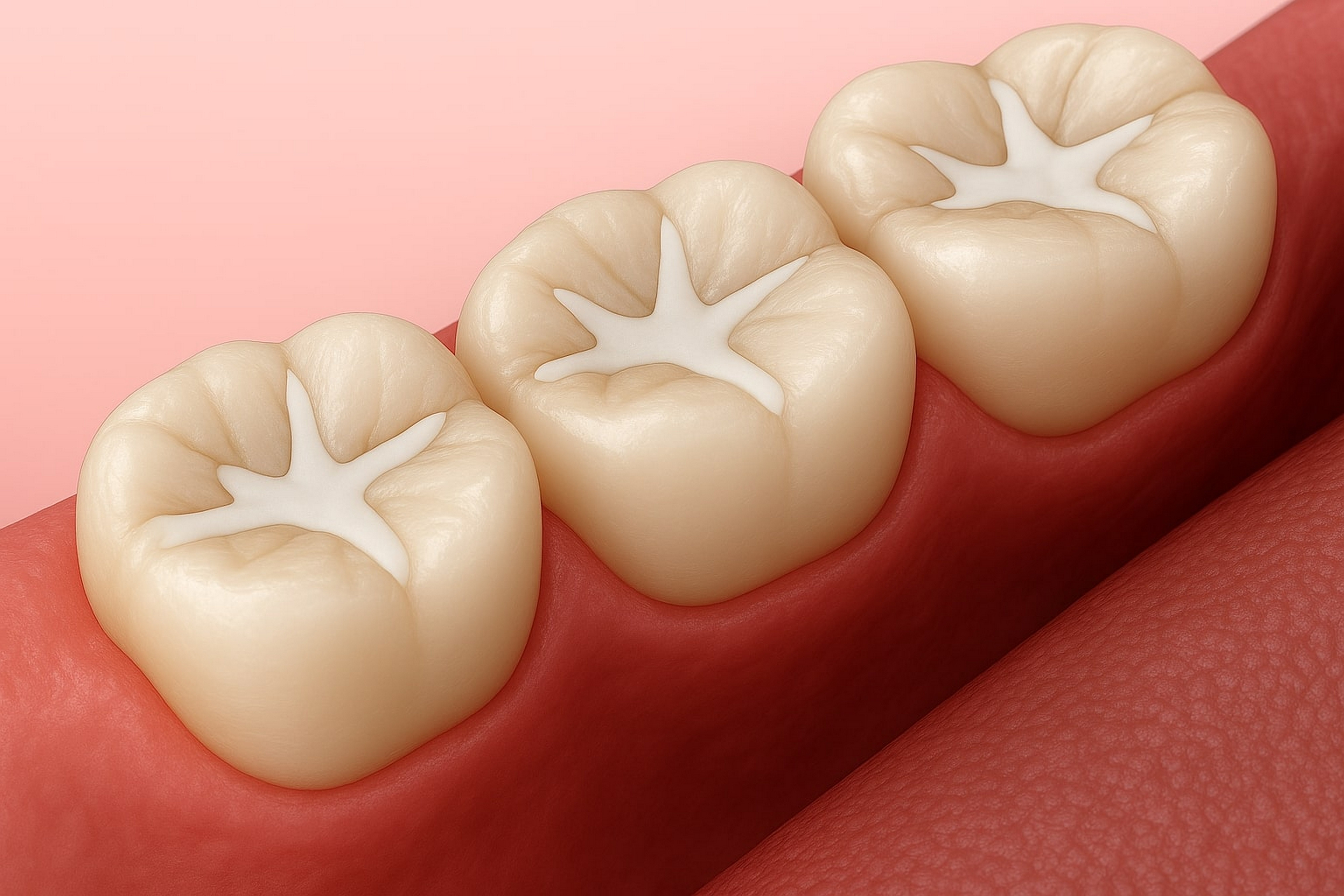
Dental sealants are one of those preventive treatments that often receive less attention than they deserve. Patients are usually interested in fillings, root canal treatment, braces, whitening, implants. Sealants rarely feature in conversations unless a dentist specifically brings them up.That is a mistake.When I look at the chewing surfaces of newly erupted permanent molars, particularly in school-age children, the pattern is often predictable. Deep grooves. Narrow pits. Tiny fissures running across the biting surface. Some are so fine that even a toothbrush bristle struggles to reach the bottom. Food debris settles there. Bacteria settle there. The process starts quietly.The common assumption is that cavities develop because children do not brush properly. That is only part of the story. Some children brush reasonably well and still develop decay in the grooves of their molars. The anatomy of the tooth itself creates the problem.Dental sealants act as a protective coating over these vulnerable grooves. The material flows into the pits and fissures and hardens, creating a smooth surface that is easier to keep clean. Instead of trying to clean inside a narrow crack every day, the crack is sealed.The timing matters more than most people realise.I often see parents asking about sealants when a cavity has already started. At that stage the discussion changes. Sealants work best before decay develops. Once bacteria have damaged the tooth structure beyond a certain point, a filling becomes the appropriate option.
This is why dentists frequently recommend sealants soon after the first permanent molars erupt, usually around six years of age, and again when the second permanent molars appear during the early teenage years.
The conversation around Dental Sealants in Haripad has increased over the last few years because parents are becoming more aware of preventive dentistry. That awareness is welcome. Waiting until a child complains of pain is rarely a good strategy. Pain is actually a late sign.
A tooth can have significant decay before it becomes painful.
Children are particularly poor at recognising early dental problems. They adapt. They chew on the other side. They avoid mentioning discomfort. Parents may assume everything is fine because there are no complaints.
Then an X-ray tells a different story.
There is a practical detail rarely discussed online. Applying a sealant is not technically difficult, but maintaining a completely dry tooth during placement is critical. Saliva contamination during the procedure can reduce bond strength. A sealant placed under less-than-ideal conditions may not last as long as expected.
This explains why some patients say they had sealants years ago that disappeared quickly.
The material was not necessarily defective. The technique may have been compromised.
Children with partially erupted molars present a challenge because gum tissue often covers part of the chewing surface. Isolation becomes difficult. Some dentists prefer waiting a short period until the eruption improves. Others proceed carefully if conditions allow. Neither approach is automatically right or wrong.
The idea that every child needs sealants on every tooth is also worth questioning.
Not all teeth have deep fissures. Not all children have the same cavity risk.
Some molars emerge with relatively shallow grooves that are easier to clean naturally. Some children have excellent oral hygiene, low sugar exposure and low decay rates. Dentistry works best when decisions are individual rather than automatic.
That said, high-risk children often benefit significantly from sealants.
A child with multiple previous cavities. A child is consuming sugary snacks several times a day.
A child undergoing orthodontic treatment. A child with developmental conditions that make brushing difficult.
Those situations frequently justify preventive intervention. The discussion becomes slightly different when adults ask about sealants.
There is a misconception that sealants are only for children.Not necessarily.
Adults with deep fissures and no existing decay can sometimes benefit as well. I occasionally see young adults whose molars remained cavity-free but continue to have anatomy that traps food. In selected cases, sealants remain a sensible preventive option.The challenge is that adult teeth have had years of exposure to chewing forces, staining and microscopic wear. Retention rates can differ from those seen in newly erupted teeth.
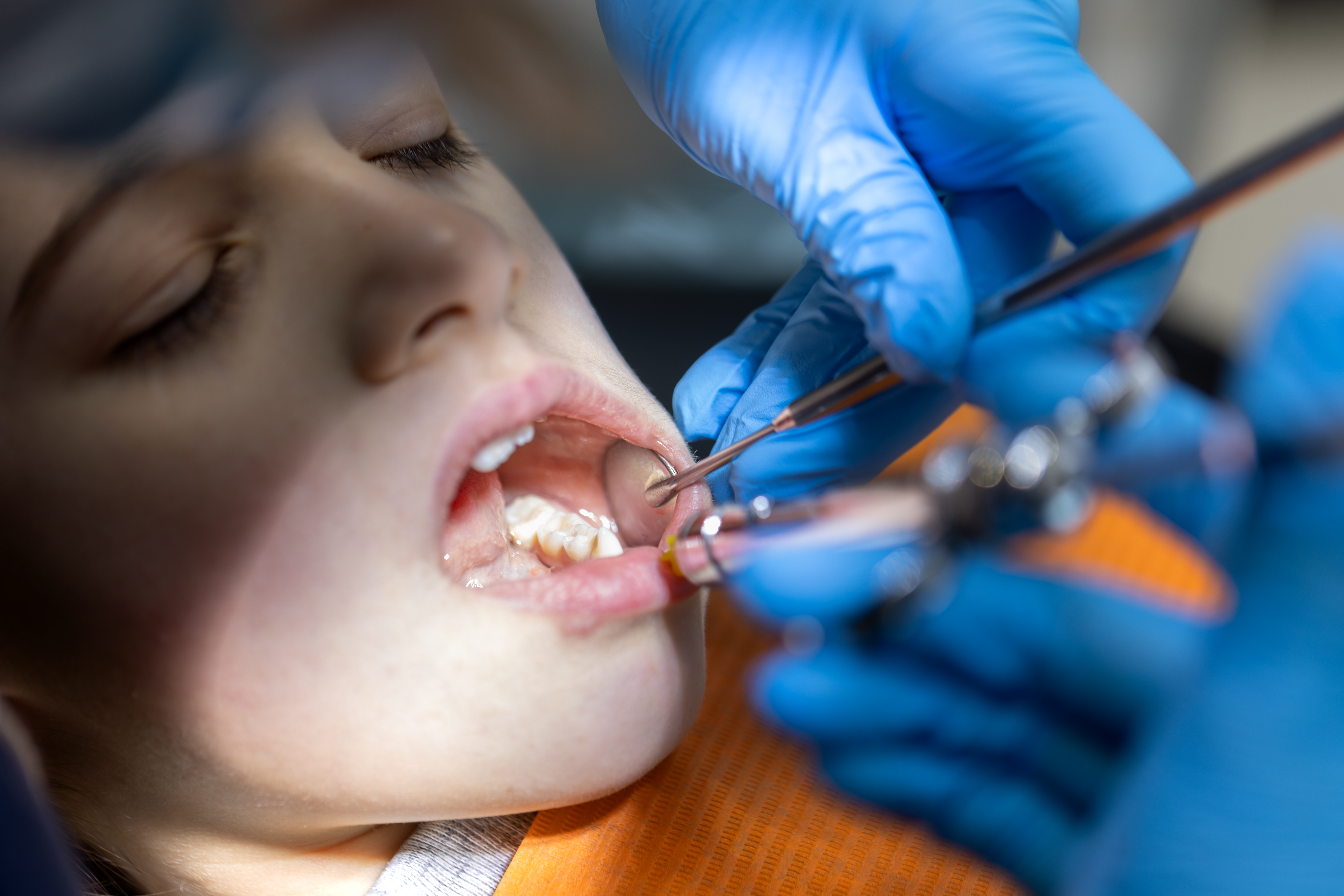
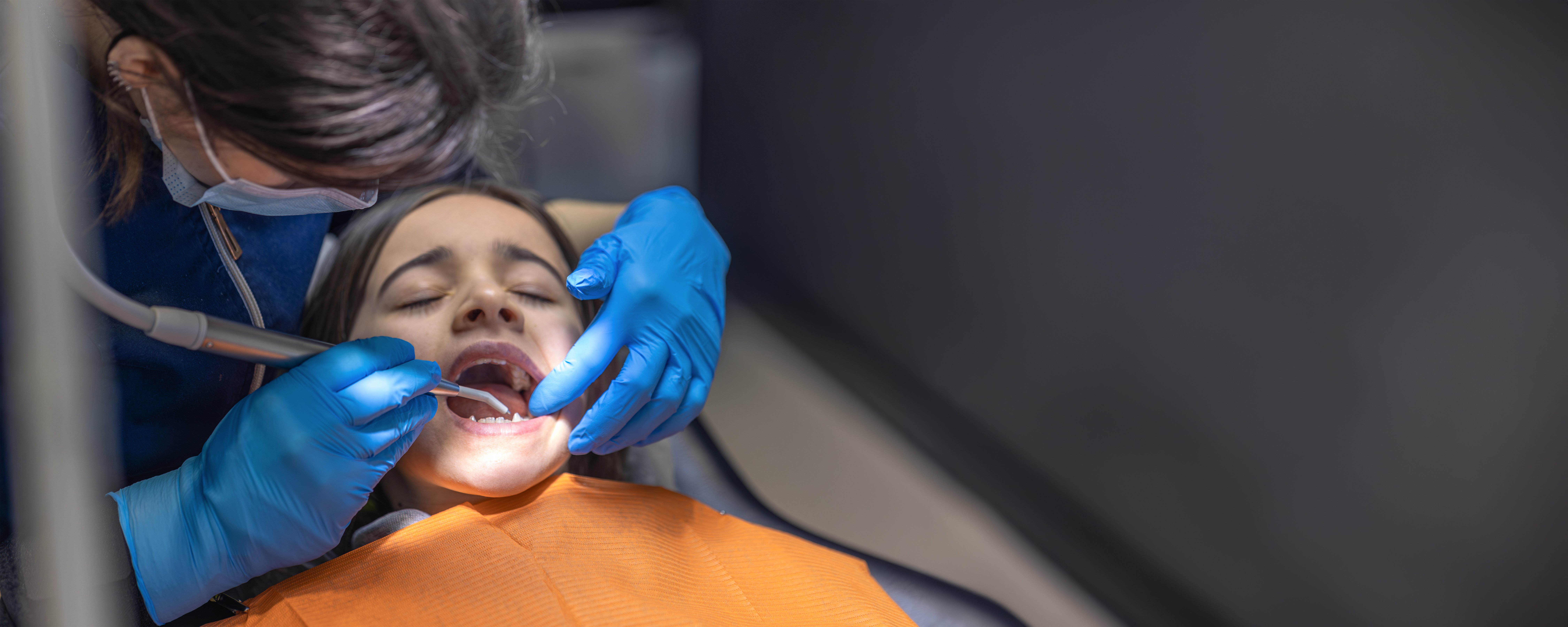
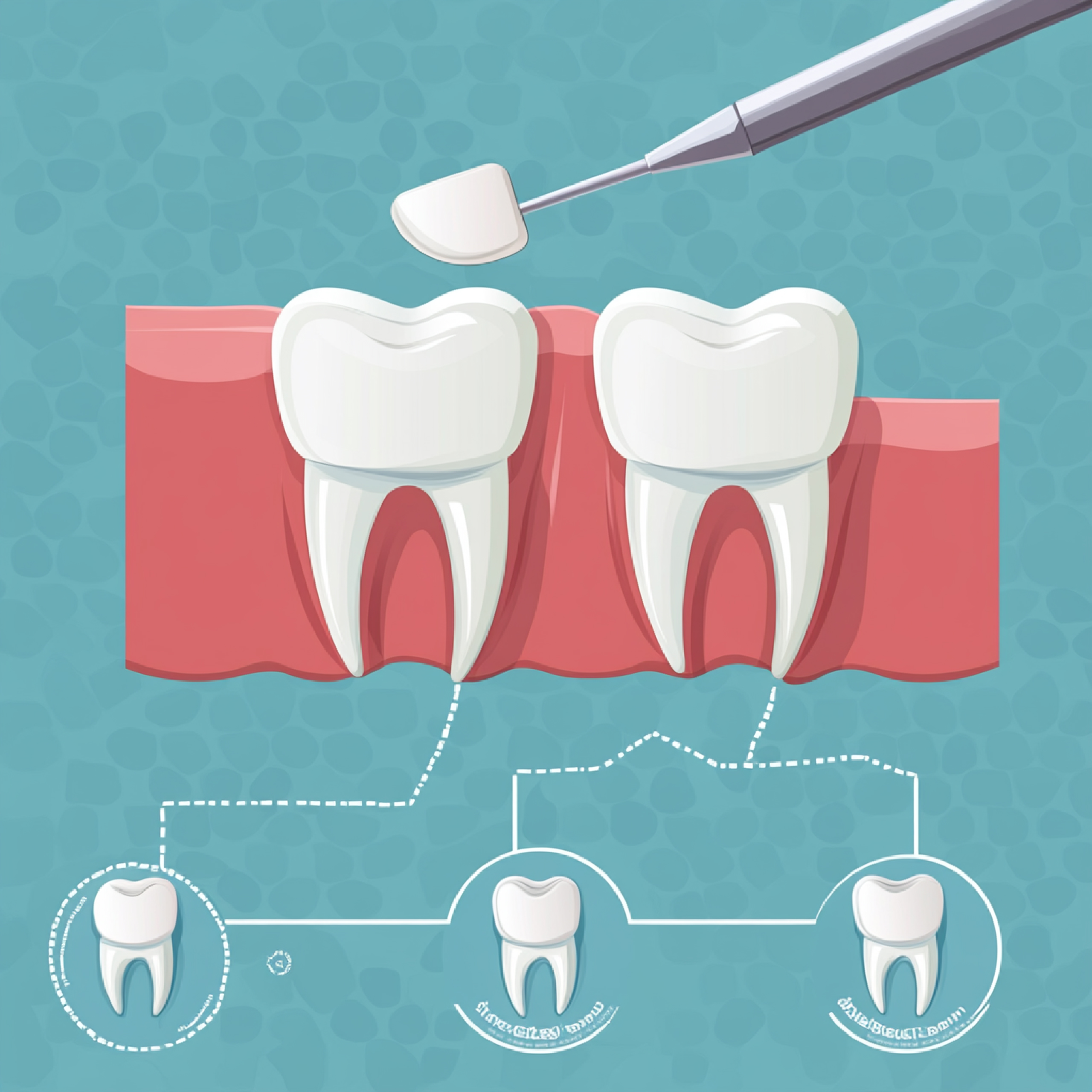
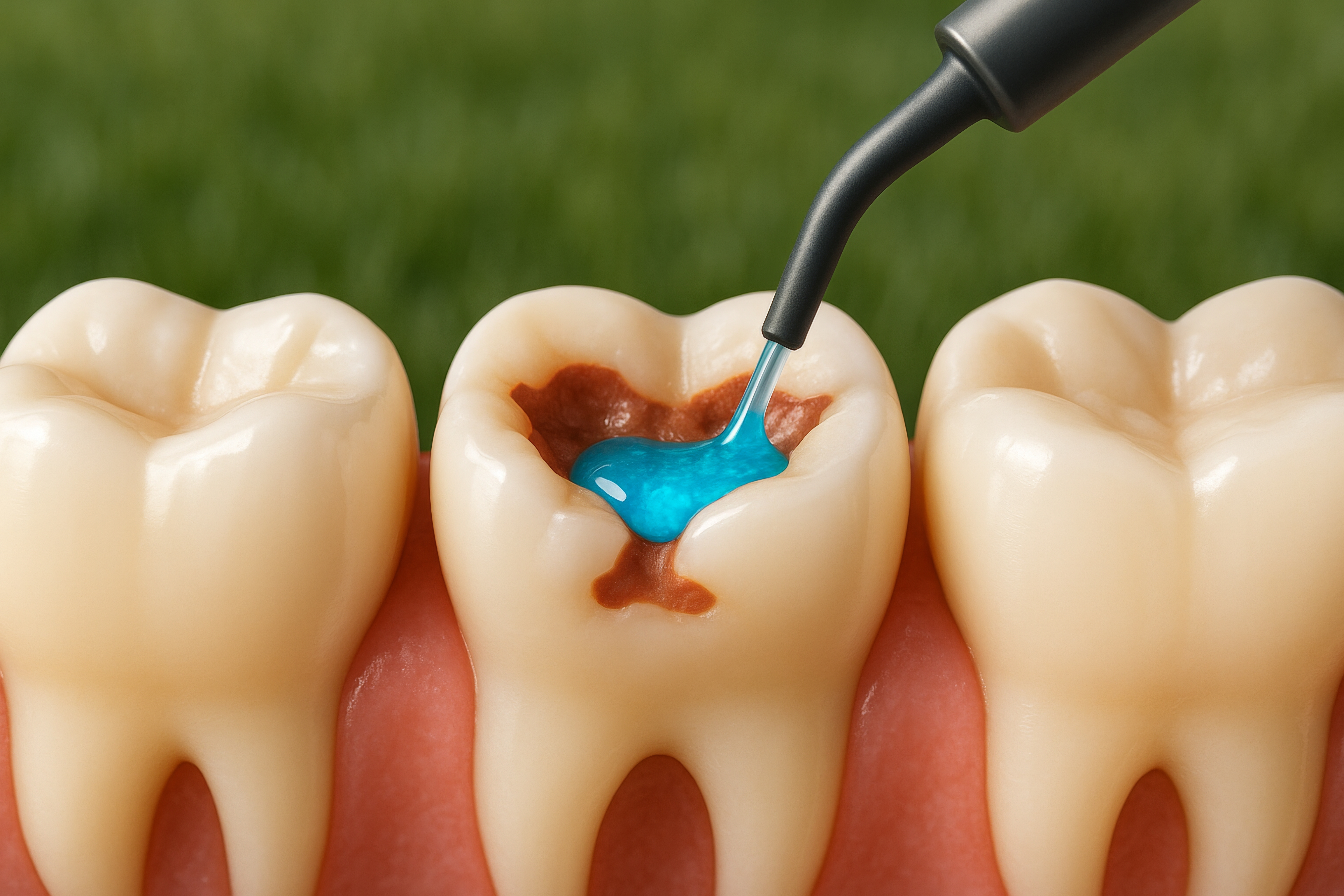
Dental sealant treatment in Haripad is usually straightforward. The tooth is cleaned. The surface is prepared using a conditioning gel. The sealant material is applied. A curing light hardens the material. The entire process generally takes only a few minutes per tooth.
No drilling. No injections. No recovery period.
Patients often expect something more dramatic because they hear the word "treatment."
Sealants are among the least invasive procedures available in dentistry.
The comparison with fillings deserves attention.
A sealant preserves healthy tooth structure. A filling requires removal of damaged tooth tissue.
That difference matters. Once a tooth receives a filling, the restoration enters a cycle of maintenance. Fillings eventually wear, leak, fracture or require replacement. The replacement filling is often larger than the original one. Decades later the tooth may require a crown. Sometimes root canal treatment follows.
Preventing the first cavity changes that entire trajectory.
People occasionally ask whether sealants contain chemicals that should be avoided. Modern dental materials are heavily regulated and studied. Discussions around material safety periodically appear online, often generating more anxiety than evidence. The practical reality is that untreated decay presents a far greater risk to dental health than professionally applied sealants. Patients sometimes make a surprisingly common mistake after sealant placement.They assume the tooth is now protected against everything.It is not. A sealant protects the grooves it covers. It does not protect the spaces between teeth.
It does not protect exposed root surfaces. It does not cancel the effects of constant sugar consumption.
Children who receive sealants and continue drinking sweetened beverages throughout the day can still develop extensive decay.
The sealant is not a force field. Brushing and flossing remain essential.
That answer disappoints some people because they hope sealants will reduce the need for daily oral care. They do not. In fact, sealants work best when combined with good oral hygiene and sensible dietary habits.
I sometimes disagree with the way preventive dentistry is presented online. There is a tendency to describe sealants as nearly perfect. Reality is less tidy.
Sealants can fail. They can wear. They can chip. They can partially detach.
A partially lost sealant may leave sections of the groove exposed again.
This is why periodic dental examinations remain necessary. The dentist is not simply checking for cavities. They are also checking whether preventive treatments remain intact.
A well-maintained sealant can last many years.
Some survive considerably longer than expected.
Others require repair much sooner. Chewing habits influence outcomes.
Tooth grinding influences outcomes. Placement technique influences outcomes.
Tooth anatomy influences outcomes. Nothing in dentistry has a fixed lifespan.
Parents often focus heavily on front teeth because they are visible. The back molars deserve more attention.
Most chewing occurs there. Most food stagnation occurs there. Most childhood cavities occur there.
The first permanent molars are particularly vulnerable because they erupt behind the baby teeth. Parents occasionally mistake them for temporary teeth.
That misunderstanding creates problems.
A six-year-old develops decay in a first permanent molar. Parents assume the tooth will eventually fall out. It will not.
That tooth is expected to remain in the mouth for decades.
The phrase Tooth sealants in Haripad appears frequently in patient enquiries now, which reflects a broader shift towards prevention rather than repair. Dentistry is slowly moving in that direction. The challenge is convincing people that preventing a cavity is less visible than fixing one.
Patients appreciate a filling because they can see something was done.
Preventive success is harder to notice.
Nothing happens. No pain develops. No cavity forms.
The absence of a problem rarely attracts attention.
Sealants for children's teeth in Haripad are particularly useful for children whose permanent molars have recently erupted. Freshly erupted enamel continues maturing after eruption. During this period the tooth can be especially susceptible to decay. Protection during those years can be valuable.
Parents sometimes ask whether sealants trap decay underneath.
The answer depends on the situation.
If a tooth is carefully examined and judged suitable for sealing, the risk is low. Modern diagnostic methods help identify obvious decay before treatment. Problems arise when existing cavities are overlooked or when assumptions are made without proper assessment.
That is one reason clinical examination remains essential.
Not every stained groove contains decay.
Not every apparently healthy groove is truly healthy.
Dentistry occasionally requires detective work.
There is also a behavioural aspect.
Children who experience repeated fillings often become anxious about dental visits. Preventive measures that reduce the need for future restorative work can indirectly improve their long-term relationship with dentistry.
Less drilling. Fewer injections. Less apprehension.
That benefit is difficult to measure but easy to appreciate.
The discussion around Dental Sealants in Haripad should probably focus less on the material itself and more on timing. A perfectly placed sealant on the wrong tooth at the wrong time offers limited value. A properly selected tooth sealed before decay begins can remain healthy for years.
Parents frequently ask whether baby teeth should receive sealants.
Sometimes yes. Sometimes no.
Primary molars with deep grooves and high decay risk can benefit. The decision depends on the expected lifespan of the tooth, cavity risk, cooperation level of the child and several other factors. Blanket recommendations rarely work well.
Dental decisions are rarely as simple as internet articles suggest.
One child with excellent oral hygiene may never need sealants.
Another child with identical-looking teeth may develop multiple cavities without them.
Risk matters. Context matters. Observation matters.
Dental Sealants in Haripad are becoming part of routine preventive care discussions, which is encouraging because prevention is usually cheaper, simpler and less invasive than restoration. Yet the best results come from realistic expectations. Sealants reduce risk. They do not eliminate risk. They protect specific surfaces. They do not protect the entire mouth.
That distinction is where misunderstandings often begin.
The phrase Tooth sealants in Haripad appears frequently in patient enquiries now, which reflects a broader shift towards prevention rather than repair. Dentistry is slowly moving in that direction. The challenge is convincing people that preventing a cavity is less visible than fixing one.
Patients appreciate a filling because they can see something was done.
Preventive success is harder to notice.
Nothing happens. No pain develops. No cavity forms.
The absence of a problem rarely attracts attention.
Sealants for children's teeth in Haripad are particularly useful for children whose permanent molars have recently erupted. Freshly erupted enamel continues maturing after eruption. During this period the tooth can be especially susceptible to decay. Protection during those years can be valuable.
Parents sometimes ask whether sealants trap decay underneath.
The answer depends on the situation.
If a tooth is carefully examined and judged suitable for sealing, the risk is low. Modern diagnostic methods help identify obvious decay before treatment. Problems arise when existing cavities are overlooked or when assumptions are made without proper assessment.
That is one reason clinical examination remains essential.
Not every stained groove contains decay.
Not every apparently healthy groove is truly healthy.
Dentistry occasionally requires detective work.
There is also a behavioural aspect.
Children who experience repeated fillings often become anxious about dental visits. Preventive measures that reduce the need for future restorative work can indirectly improve their long-term relationship with dentistry.
Less drilling. Fewer injections. Less apprehension.
That benefit is difficult to measure but easy to appreciate.
The discussion around Dental Sealants in Haripad should probably focus less on the material itself and more on timing. A perfectly placed sealant on the wrong tooth at the wrong time offers limited value. A properly selected tooth sealed before decay begins can remain healthy for years.
Parents frequently ask whether baby teeth should receive sealants.
Sometimes yes. Sometimes no.
Primary molars with deep grooves and high decay risk can benefit. The decision depends on the expected lifespan of the tooth, cavity risk, cooperation level of the child and several other factors. Blanket recommendations rarely work well.
Dental decisions are rarely as simple as internet articles suggest.
One child with excellent oral hygiene may never need sealants.
Another child with identical-looking teeth may develop multiple cavities without them.
Risk matters. Context matters. Observation matters.
Dental Sealants in Haripad are becoming part of routine preventive care discussions, which is encouraging because prevention is usually cheaper, simpler and less invasive than restoration. Yet the best results come from realistic expectations. Sealants reduce risk. They do not eliminate risk. They protect specific surfaces. They do not protect the entire mouth.
That distinction is where misunderstandings often begin.
What are dental sealants and how do they work to prevent cavities?
Dental sealants are delicate protective coatings that get applied to the chewing surfaces of the scoop's teeth. These will fill deep pits and fissures where food and bacteria often collect. This decreases the possibility of cavities by sealing such locations.
Who should consider dental sealants—children, teens, or adults?
The ideal patients are typically children and adolescents with recently erupted permanent molars. Selected adults with deep grooves without caries may also benefit.
What are the benefits of dental sealants compared to fillings?
Sealants help prevent cavities before tooth structure is damaged. Fillings are used after decay has already occurred and require removal of affected tooth tissue.
Do dental sealants replace brushing and flossing?
No. Sealants only protect the surfaces they cover. Daily brushing, flossing and sensible dietary habits remain necessary.
Experiences
Expert Dentist
Dentist Services
Dentist Equipments
FAQ
What are dental sealants?
They are protective resin coatings applied to vulnerable chewing surfaces to reduce cavity risk.
Who should get dental sealants?
Children with newly erupted permanent molars, individuals at higher cavity risk and selected adults with deep fissures may be suitable candidates.
Do dental sealants replace brushing and flossing?
No. They complement oral hygiene but do not replace it.
Are dental sealants painful?
The procedure is generally painless. No drilling or injections are usually required.
How long do dental sealants last?
They often last several years, though longevity varies depending on chewing habits, tooth anatomy, placement quality and ongoing maintenance.
Your Healthier Smile Awaits - Book Now!
Your Healthier Smile Awaits - Book Now!
The goal of our clinic is to provide the best dentistry to our patients.


Copyright © 2026. Sree Lakshmi Multi Speciality Dental Care.All Right Reserved.
Copyright © 2026.
Sree Lakshmi Multi Speciality Dental Care.
All Right Reserved.