
Our Service
Pediatric Dentistry in Haripad: the small teeth that create big trouble when ignored
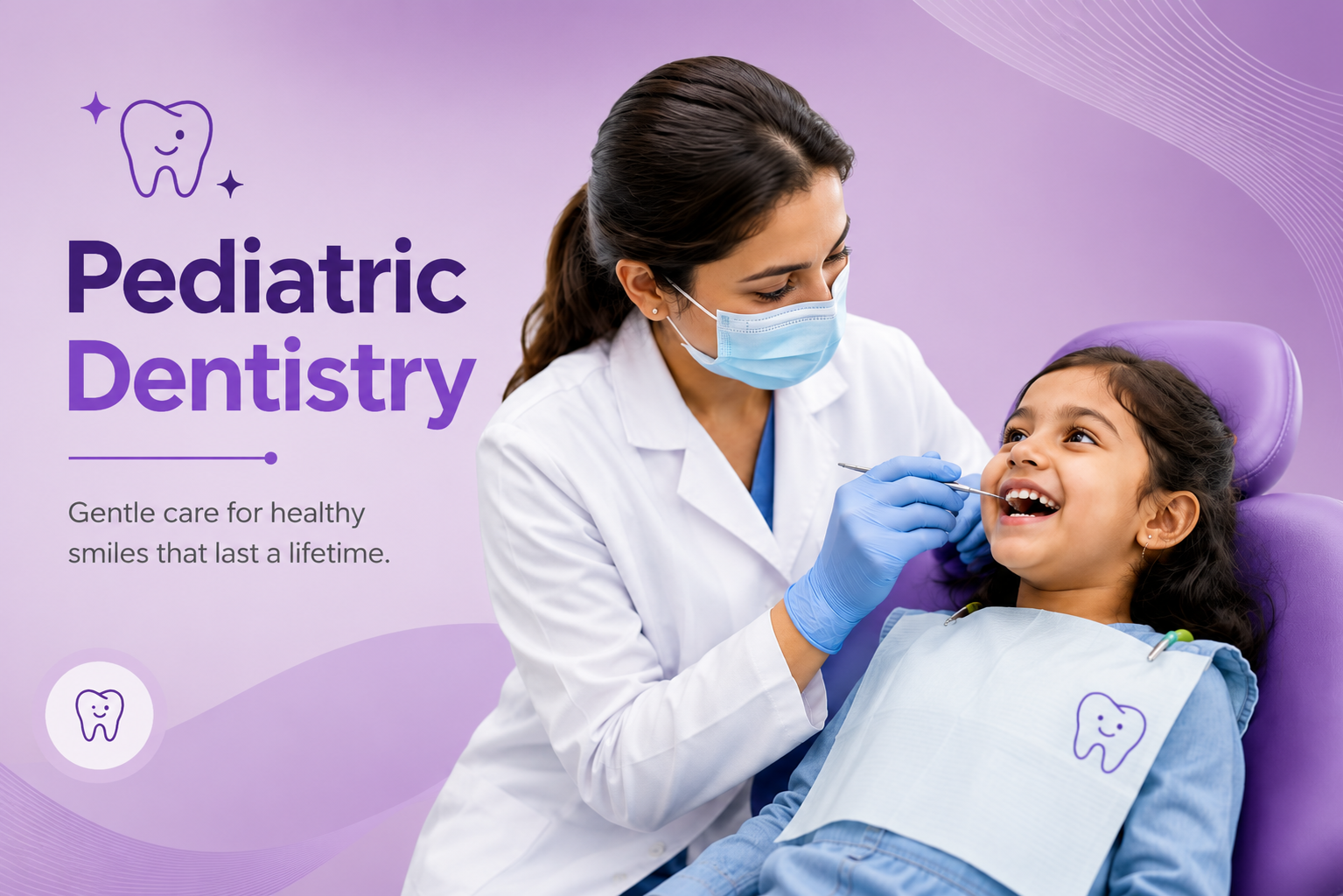
A child’s mouth rarely gives parents a clean warning. It does not behave like adult dentistry, where a patient can point to a molar and say, “Pain starts when I chew.” A three-year-old may refuse dosa for two days, sleep badly, cry when brushing, then run around normally in the clinic. A six-year-old may say nothing until the cheek swells on a school morning. Parents in Kerala often wait because the tooth is “only milk tooth”. That sentence has caused more avoidable dental infection than almost any sweet.
Milk teeth are temporary. The problems they create are not always temporary.
A decayed baby molar can affect eating, sleep, speech, school attendance, confidence, and the space needed for the permanent tooth waiting underneath. The mistake is thinking of children’s dentistry as a smaller version of adult dentistry. It is not. The tooth structure is different, the pulp is proportionally larger, the child’s tolerance is limited, and the parent’s anxiety enters the room before the child does.
Pediatric Dentistry in Haripad has to deal with a very local pattern of childhood dental trouble. Frequent snacking. Sweet tea. Bakery food after tuition. Bottled milk at night. Grandparents giving treats out of affection. Children brushing fast before school while parents assume the job is done. Kerala families are health-aware in many ways, but oral health often enters the conversation only after pain starts.
That is too late.
The first dental visit should happen before pain starts
The first dental visit should not wait until school admission age. The American Dental Association advises that a child should see a dentist after the first tooth appears, and not later than the first birthday. The American Academy of Pediatric Dentistry gives the same practical window: within six months of the first tooth coming in or by age one.
Parents sometimes laugh when they hear this. “What will the dentist check? Only two teeth are there.” Quite a lot, actually. Feeding habits. Cleaning technique. Early enamel defects. Tongue habits. Bottle use. Gum health. Fluoride exposure. Whether the child is already developing a pattern that will become decay at three.
The early visit is not about drilling.
A proper Dental check-up for kids should feel almost boring when done at the right time. Count the teeth. Look at the gums. Check eruption. Speak to the parent. Watch how the child reacts. Apply preventive care when needed. Send the family home before disease has taken over the appointment.
That is good paediatric dentistry. Quiet. Preventive. Slightly uneventful.
The difficult cases usually come from delay. A lower back milk tooth breaks. Food keeps getting stuck. The child chews from one side. The parent gives warm salt water, then clove oil, then a pain syrup, then waits because the pain has reduced. Pain reducing is not always healing. In children, a dead or dying nerve can stop hurting for a while. Infection may continue under the tooth. Then swelling appears, sometimes near the gum, sometimes outside the face.
At that stage the conversation changes. Now we are no longer speaking only about a filling. We may be speaking about pulp therapy, stainless steel crowns, extraction, space maintainers, antibiotics only when clearly indicated, and behaviour management because the child is already frightened.
Fear, behaviour and the child in the chair
Common advice says, “Do not scare the child before the dental visit.” True, but incomplete. Parents scare children in very gentle ways. “Don’t worry, it won’t hurt.” “Doctor will just see.” “No injection.” “Be brave.” The child hears pain, injection, danger, performance. Better to say less. “The dentist will count your teeth and help clean them.” Enough.
A paediatric dentist watches the parent as much as the child. A calm parent can settle a nervous child. A nervous parent can unsettle a calm one.
Some children cry because they are afraid. Some cry because they are tired. Some cry because the appointment is during nap time. Some cry because three adults are standing over them and everyone is negotiating. In Kerala clinics, relatives sometimes come in groups. Mother, father, grandmother, uncle, younger sibling. Too many voices. Too many instructions. “Open.” “Don’t cry.” “Look here.” “Be a good boy.” The child shuts down.
The better appointment is quieter.
For anxious children, the first win may not be treatment. It may be sitting on the chair. Touching the mirror. Opening for five seconds. Letting the suction make a funny sound. A specialist who handles children regularly knows when to push and when to stop. Pushing too hard can finish the tooth and damage the child’s trust. Stopping too early can leave disease untreated. That balance is the work.
Pediatric Dentistry in Haripad is not only about fillings, fluoride and small chairs. It is also about judgement. A tiny cavity in a cooperative seven-year-old is a different matter from the same cavity in a three-year-old who cannot sit still and has decay on four teeth. A dentist may choose preventive sealing in one case, a filling in another, pulp therapy in another, and extraction in a tooth that cannot be saved. The textbook may show neat stages. Real children do not arrive in textbook stages.
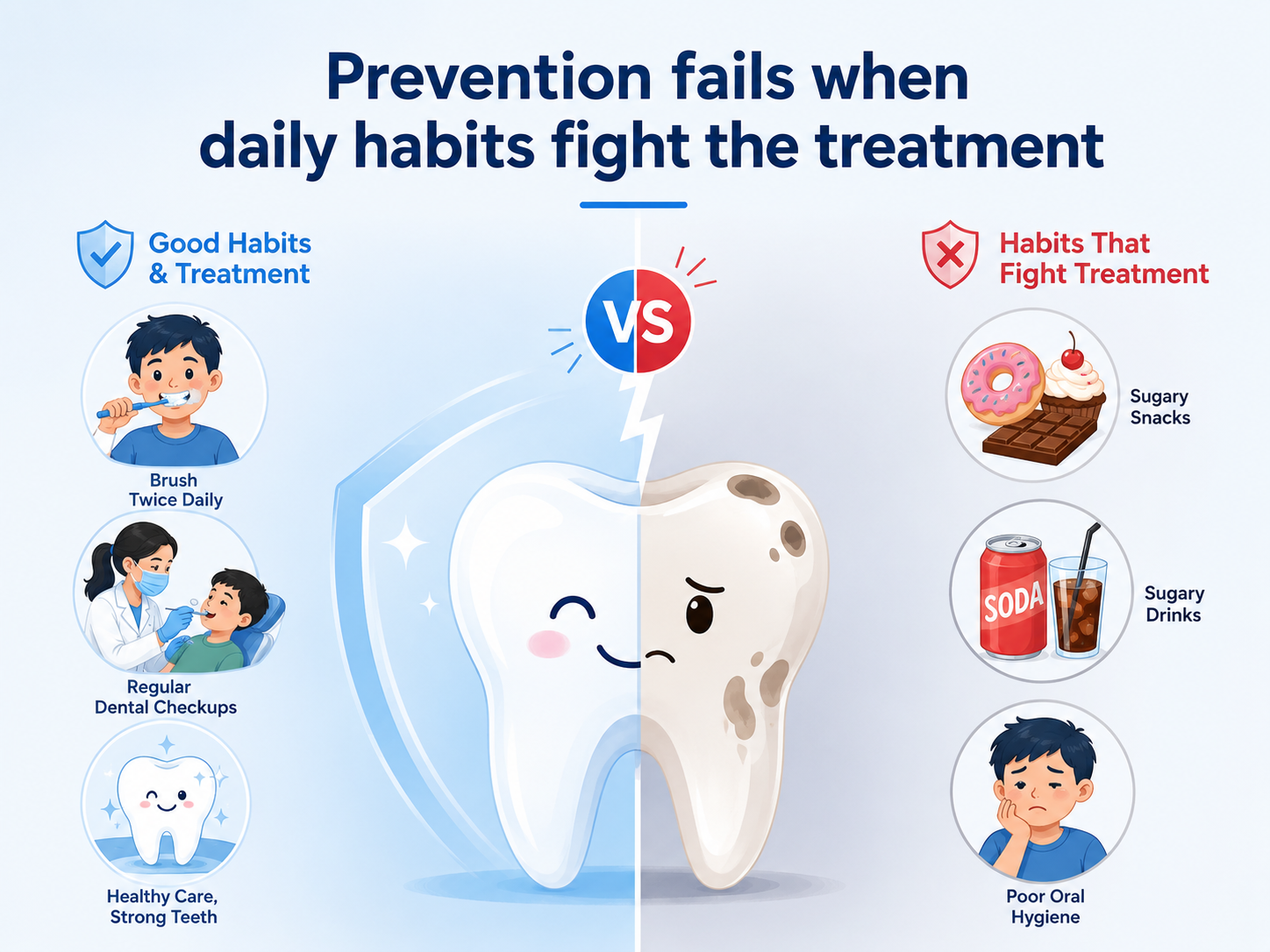
Prevention fails when daily habits fight the treatment
Fluoride is another area where parents receive confusing advice. Some fear it. Some overuse toothpaste. Some buy colourful toothpaste with no fluoride because the child likes the taste. The evidence remains straightforward: fluoride varnish helps prevent cavities in baby teeth, and brushing with fluoride toothpaste reduces decay risk. The CDC also notes that dental sealants on back teeth can prevent a large share of cavities in those chewing surfaces.
But fluoride is not magic. A child sipping sweet drinks through the day can still get cavities. A child sleeping with milk in the mouth can still get cavities. A child brushing once in a hurry with a wet brush and too much foam can still get cavities. Prevention fails when the daily routine fights the clinic treatment.
Parents ask for “permanent solution”. Childhood dentistry rarely works like that.
A filling in a milk tooth can fail if the child keeps chewing sticky sweets every day. A crown can come loose if the tooth underneath was already badly weakened or if the child bites very hard. Pulp therapy can fail if infection has spread too far before treatment. A space maintainer can break if the child plays with it using the tongue. Sealants can chip and need checking. Even a beautifully done treatment needs maintenance.
That is not poor dentistry. That is biology, behaviour and timing.
The biggest hidden factor is frequency of sugar, not just quantity. A child who eats one sweet after lunch may be less at risk than a child who takes tiny sweet snacks ten times a day. The mouth needs recovery time. Constant snacking keeps the enamel under attack. In Kerala homes, this pattern is common during holidays, online classes, tuition days and family functions. Banana chips, biscuits, sweetened milk, bakery puffs, juice, chocolate-coated snacks. Not all are equally harmful, but the mouth does not appreciate repeated exposure.
Brushing at night matters more than parents think.
Morning brushing is social. Night brushing is medical. The mouth becomes drier during sleep, and food left around the teeth sits there for hours. A child who brushes only in the morning is cleaning for smell and appearance. The disease process has already enjoyed the night.
Parents also stop helping too early. A five-year-old can hold a brush. That does not mean the child can clean properly. The back molars are missed. The gumline is missed. The inside surfaces of lower teeth are missed. Children need supervision longer than parents expect, often until they have the hand skill and patience to do the job properly.
The phrase Pediatric dentist near me usually appears in a parent’s phone after pain starts. I wish it appeared earlier. Not because every child needs treatment, but because every parent needs a risk reading. A child with deep grooves, enamel weakness, mouth breathing, special health needs, high snack frequency, or previous decay cannot be placed in the same category as a child with low risk and excellent home care.
Children's oral health is not separate from general health. A child with dental pain may avoid certain foods, sleep badly, miss class, become irritable, or lose weight in subtle ways. Severe untreated infection can spread. These are not dramatic scare points. They are the ordinary consequences of ignoring small teeth for too long.
Treatment, timing and the questions parents keep asking
There is also the matter of front teeth. Parents worry about appearance when upper front milk teeth decay, but the problem often began much earlier with feeding patterns. Night feeding after teeth erupt, especially when cleaning is not done, can create decay across the upper front teeth. The lower front teeth may look better because the tongue protects them. Parents see the upper teeth crumble and feel shocked. The process was not sudden. It was just hidden in plain sight.
Treatment planning for front milk teeth is delicate. A small early lesion may be arrested. A larger cavity may need restoration. A badly broken infected tooth may need removal. Aesthetic crowns exist, but not every child, tooth, bite or budget suits them. A dentist who promises perfect-looking front teeth in every situation is being too neat with a messy problem.
School-age children bring another layer. Permanent first molars come in around six years of age, behind the milk teeth. Parents often think they are milk teeth because no tooth fell out before them. These molars are meant to last for life. They arrive when the child is still poor at brushing. Their grooves are deep. Decay can start early. By the time the child complains, the cavity may be large.
This is where sealants are useful. Not glamorous. Not exciting. A protective coating on the chewing surface. When placed well and reviewed, it can save a molar from the usual slow disaster. The CDC describes sealants as protective coatings for back teeth that can guard against cavities for years.
No child should be dragged into dental care only through pain.
Pediatric Dentistry in Haripad should be familiar to families before an emergency. The child should know the chair before a toothache. The parent should know the dentist before swelling. The dentist should know the child’s pattern before deciding treatment under pressure.
Some parents insist on antibiotics for tooth pain. Antibiotics do not repair cavities. They do not clean infected pulp. They do not rebuild enamel. They may be needed when infection has spread or when there is fever, swelling, systemic involvement, or a clear clinical indication. Used casually, they delay proper treatment and create a false sense of safety. Painkillers also hide the message, not the cause.
A cavity is a hole with a history.
Diet history, brushing history, saliva, tooth shape, family routine, fear, money, access, school timing, parent availability. All of it sits inside that small brown spot. Treating the spot without discussing the history is how the next spot appears.
The child with special needs deserves separate mention. Dental care may require shorter visits, sensory planning, desensitisation, parental preparation, sometimes hospital-based support. A rushed clinic visit can be unfair to the child and to the dentist. Success may look slow from outside. Two visits just to build tolerance may be excellent progress. Families should not feel embarrassed about that.
Then there are teenagers. Not small children, not adults. Orthodontic appliances, sports drinks, mouth breathing, irregular meals, social embarrassment, poor brushing around braces, hidden decay between teeth. Teenagers rarely respond well to lectures. They respond better to blunt, respectful conversation. Show the plaque. Show the gum bleeding. Explain the consequence without drama. Give them ownership.
Pediatric Dentistry in Haripad sits inside family life, school life and local habits. It cannot work by blaming parents. Most parents are not careless. They are busy, misinformed, reassured by the phrase “milk tooth”, or waiting for a pain pattern that never arrives clearly. The clinic’s job is not to shame them. The job is to catch disease early, treat what needs treatment, and make the next problem less likely.
Why is pediatric dentistry important? Because childhood dental disease moves fast, affects daily life, and can damage the path of permanent teeth. Because early fear can become adult dental avoidance. Because a child who learns that dental visits are only for pain may carry that belief for decades.
When should my child first visit a pediatric dentist? After the first tooth appears, or by the first birthday. That may feel early in a Kerala household where dental visits traditionally start much later, but early visits are meant to prevent trouble rather than treat it.
What is the right age for a child's first dental check-up? Around the first birthday is the practical answer. Earlier if a tooth erupts early, if there is visible staining, feeding difficulty, trauma, swelling, or a family history of severe early decay.
How do pediatric dentists help anxious children? By slowing the room down. By using child-friendly language, demonstration, short appointments, positive exposure, tell-show-do methods, parental guidance, and treatment choices that match the child’s age and coping ability. Sometimes the best clinical skill is knowing when not to start drilling.
What is pediatric dentistry? It is dental care for infants, children and adolescents, including prevention, diagnosis, fillings, pulp therapy, crowns, extractions, habit counselling, trauma care, space maintenance, early growth assessment and behaviour management. In practice, it is dentistry shaped around a developing child, not an adult mouth made smaller.
At what age should my child first visit a dentist? By age one. The answer does not change because the child has only a few teeth. Those few teeth are enough to start decay.
How often should children have dental check-ups? Six-monthly visits suit plenty of children, but risk matters. A child with repeated cavities, braces, enamel defects, poor brushing, high sugar frequency, medical issues, or previous dental infection may need closer review. A low-risk child with excellent care may not need the same intensity. The interval should be decided in the chair, not copied from a calendar.
How can I prevent cavities in my child? Brush at night with the right amount of fluoride toothpaste, supervise properly, reduce frequent sugar exposure, avoid milk or sweet drinks sitting in the mouth during sleep, check the back molars, use preventive fluoride or sealants when advised, and stop waiting for pain before booking a visit. Prevention is not one instruction. It is a routine that survives school mornings, grandparents, birthdays, holidays and tired evenings.
That is where Pediatric Dentistry in Haripad matters most: not in dramatic rescue work, but in the ordinary discipline of seeing small problems before they become the family’s next emergency.
Experiences
Expert Dentist
Dentist Services
Dentist Equipments
FAQ
Why is pediatric dentistry important?
Pediatric dentistry is important because children’s dental problems can progress quickly and affect eating, sleep, speech, school attendance, permanent tooth development, and confidence. It also helps children become comfortable with dental visits from an early age.
What is pediatric dentistry?
Pediatric dentistry is dental care for infants, children, and teenagers. It includes prevention, diagnosis, fillings, pulp therapy, crowns, extractions, space maintainers, dental trauma care, habit counselling, and behaviour management.
At what age should my child first visit a dentist?
Your child should visit a dentist after the first tooth appears and not later than the first birthday.
What is the right age for a child’s first dental check-up?
Around the first birthday is the ideal time. Visit earlier if you notice stains, cavities, swelling, injury, feeding difficulty, or any unusual change in the mouth.
How do pediatric dentists help anxious children?
Pediatric dentists use child-friendly communication, short visits, tell-show-do methods, calm demonstrations, positive reinforcement, and behaviour guidance to help children feel safe during dental care.
Your Healthier Smile Awaits - Book Now!
Your Healthier Smile Awaits - Book Now!
The goal of our clinic is to provide the best dentistry to our patients.


Copyright © 2026. Sree Lakshmi Multi Speciality Dental Care.All Right Reserved.
Copyright © 2026.
Sree Lakshmi Multi Speciality Dental Care.
All Right Reserved.