
Our Service
Teeth Whitening in Haripad: How to Get a Brighter, More Confident Smile
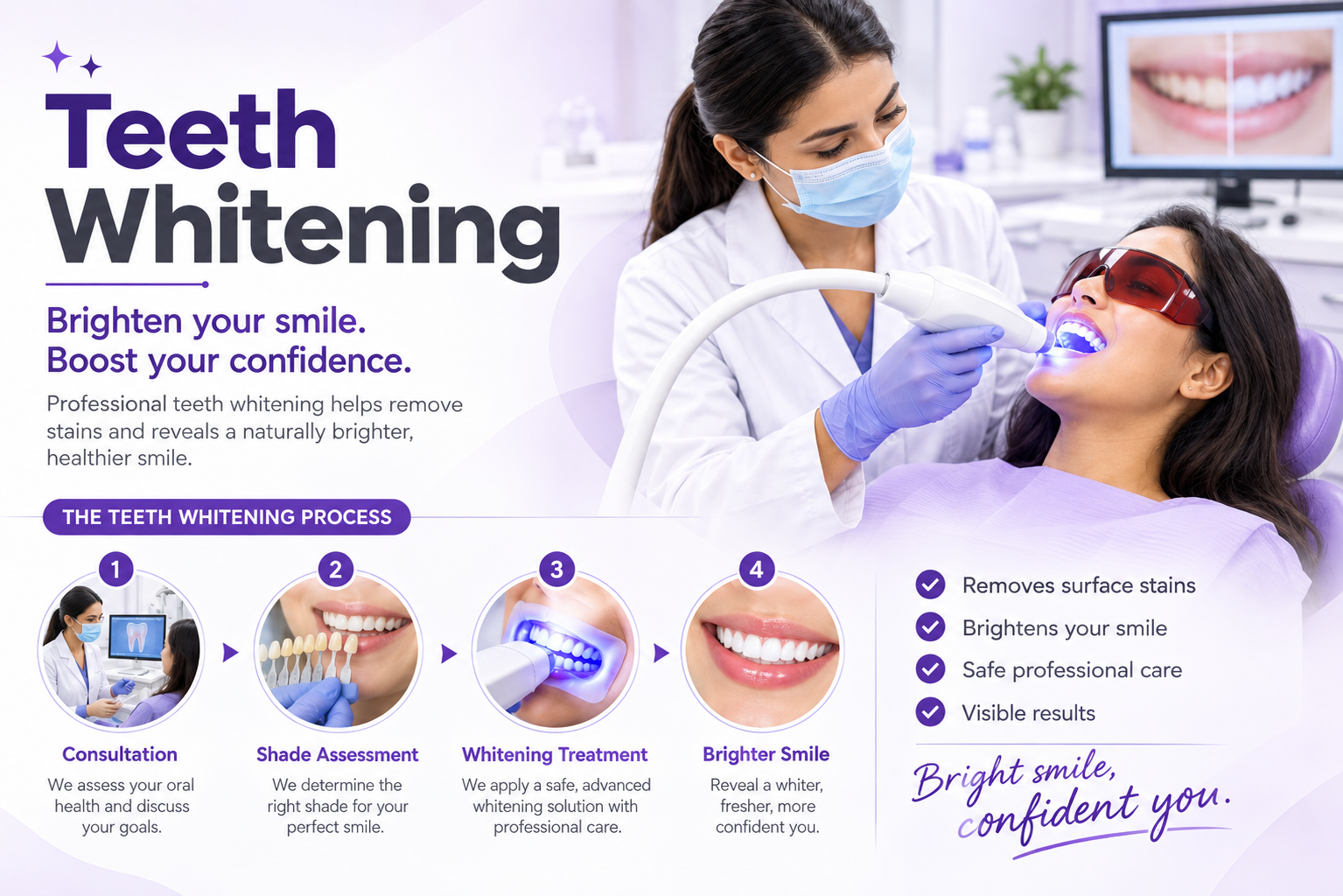
A bright smile is not necessarily a paper-white smile. In clinical dentistry, that distinction matters.
Natural teeth contain several shades at the same time. The enamel is translucent. Dentine beneath it contributes much of the warmer colour we see. Canines are commonly a little deeper in shade than the front incisors. The area near the gum line may also appear slightly warmer. A well-planned whitening treatment respects those characteristics rather than trying to make every tooth look unnaturally opaque.
Patients considering teeth whitening in Haripad are usually looking for something quite specific: a fresher smile without changing the shape, position or character of their teeth. Whitening suits that requirement particularly well because the improvement can be noticeable while the person's own teeth remain completely recognisable.
The real skill lies in deciding how far to take it.
Why Tooth Colour Changes More Than Patients Realise
Tea deserves some of the attention it gets in conversations about staining, particularly in Kerala where several cups during the day are hardly unusual. Coffee, certain strongly coloured foods and tobacco can also leave pigments on tooth surfaces.
That is only part of the picture.
Teeth naturally mature in colour. Enamel characteristics change over time and the underlying dentine becomes more visually influential. Someone may brush carefully twice a day and still notice that the smile does not look as bright as it did years earlier. That is not necessarily a cleaning problem.
Surface deposits are another matter. Plaque, calculus and external staining can affect how light reflects from a tooth. Sometimes what a patient describes as a whitening problem improves considerably after professional cleaning.
The useful question is not simply, "Why are my teeth yellow?"
It is: where is the colour coming from?
That distinction influences the treatment. External deposits may respond beautifully to scaling and polishing. Colour held within the tooth structure is approached differently. A considered yellow teeth treatment begins by identifying which of these factors is contributing to the appearance.
There are also individual teeth that darken differently from their neighbours. Those deserve separate assessment rather than stronger whitening across the entire mouth.
What Whitening Actually Changes in a Smile
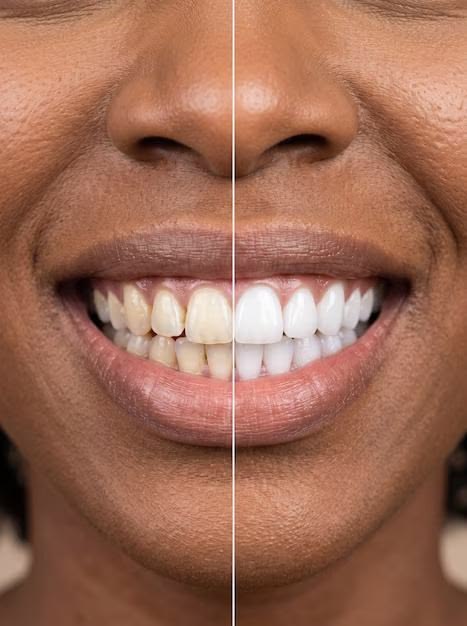
Whitening works on colour. It does not need to reshape the tooth to make a visible difference.
Whitening agents penetrate the tooth structure and act on coloured molecules responsible for staining and discolouration. As those pigments become less visually prominent, more light is reflected through the tooth and the smile appears brighter.
That sounds straightforward. Clinically, concentration, application, contact time and the condition of the teeth all matter.
This is where teeth whitening in Haripad should be viewed as an individual dental procedure rather than a standard cosmetic product. Two people beginning with apparently similar tooth shades may not finish at exactly the same shade. The structure of their enamel, the nature of the staining and their existing restorations may differ.
The best result is not always the maximum possible shade change.
A patient with naturally warm skin tones, for example, can look excellent with teeth that are bright but still softly natural. Pushing the shade far beyond the character of the face can make the teeth become the first thing anyone notices. Good cosmetic dentistry is usually more restrained than that.
Whitening also has a useful place before other aesthetic treatment. When veneers, bonding or crowns are being considered, establishing the preferred natural tooth shade first can help the dentist plan restorations that blend more accurately.
Why the Dental Examination Comes Before the Whitening
The examination is not a formality.
Before whitening, a dentist looks at the gums, enamel surfaces, existing fillings or crowns, exposed root surfaces and any areas requiring attention. Professional cleaning may also be advised when surface deposits are masking the underlying shade.
A small detail makes a considerable difference here: existing tooth-coloured restorations do not whiten in the same way as natural enamel.
Imagine a patient with a composite filling on one front tooth that currently matches perfectly. The natural teeth become brighter after whitening, while the old restoration keeps its original shade. There is nothing unusual about that. The solution is simply to plan the sequence correctly. Once the final shade has stabilised, the restoration can be reassessed if necessary.
The same planning applies to crowns and veneers in visible areas.
That is why a consultation with a teeth whitening dentist in Haripad is more useful than choosing a whitening strength from a packet. The dentist is not only considering whether the teeth can become lighter. The dentist is looking at how the entire visible smile will respond.
Sreelakshmi Multi-Speciality Dental Care lists teeth whitening within its range of cosmetic dental treatments in Harippad.
A Natural Result Depends on Shade, Not Just Whiteness
Dental shade is surprisingly complex.
People sometimes arrive with a photograph of a celebrity smile and ask for exactly that colour. Photographs are unreliable reference points. Studio lighting, phone processing, filters, lipstick shades, skin tone and even the colour of the surrounding room can make teeth look significantly different.
Shade assessment in the dental chair is more useful.
The dentist can examine how the teeth appear alongside the lips, gums and facial features. It is also possible to identify whether the colour is broadly uniform or whether certain teeth need closer attention.
For teeth whitening in Haripad, this individual assessment is particularly valuable when patients want a visible improvement but still want friends and colleagues to see a natural smile rather than immediately recognise that cosmetic dental treatment has been carried out.
There is another point rarely discussed outside dental practice. Teeth can appear temporarily different immediately after a whitening appointment because the enamel has been exposed to the treatment process and may be slightly dehydrated. Judging the definitive shade too quickly can be misleading. Allowing the colour to settle gives a more realistic impression of the result.
Patience for a short period is often better than chasing another shade immediately.
Keeping a Brighter Smile Looking Fresh
Whitening results can remain attractive for a substantial period, but the rate at which colour gradually returns is personal.
Tea and coffee habits matter. Tobacco matters. Oral hygiene matters. The original cause of the discolouration matters.
Nobody needs to live on colourless food after whitening.
The more sensible approach is routine care. Regular brushing, appropriate interdental cleaning and periodic dental cleaning help keep surface staining under control. After strongly coloured drinks, rinsing the mouth with plain water is a simple habit. It does not replace brushing, nor does it need to. It merely reduces the time pigments remain around the teeth.
Some patients eventually choose a whitening top-up. That should be guided by the actual shade rather than a calendar date. A smile that still looks fresh does not require treatment simply because a certain number of months have passed.
The same principle applies when selecting teeth whitening in Haripad for an upcoming wedding, family function, professional event or photography session. Plan it with enough time for assessment, treatment and shade settling. Cosmetic dentistry tends to look better when it is not rushed into the final few days before an important event.
Experiences
Expert Dentist
Dentist Services
Dentist Equipments
FAQ
How does professional teeth whitening work?
Dentist-supervised whitening uses a controlled whitening agent to reduce pigments within the tooth structure. The treatment is planned according to the condition of the teeth, existing shade and the degree of brightening being sought. The change occurs without needing to alter the natural shape of the teeth.
What causes teeth to become yellow or stained?
Tooth colour can be influenced by tea, coffee, tobacco, strongly pigmented foods, surface deposits and natural changes within enamel and dentine over time. Genetics and the natural thickness and translucency of enamel also influence how bright a person's teeth appear.
How long do teeth whitening results last?
There is no single expiry date. Results vary according to the original tooth colour, oral hygiene, dietary habits and exposure to staining substances. Good routine dental care can help a brighter shade remain fresh for longer, and occasional dentist-guided top-ups may be suitable when required.
Who is a suitable candidate for teeth whitening?
Adults with healthy teeth and gums who would like to improve tooth colour are commonly considered for whitening. Suitability is confirmed after examination because existing crowns, veneers, fillings, exposed root surfaces and the type of discolouration can influence treatment planning.
What is professional teeth whitening?
It is a dentist-planned cosmetic treatment designed to brighten natural tooth colour using dental whitening agents under controlled conditions. The aim is usually a cleaner, fresher and naturally brighter appearance rather than an artificial white shade.
Your Healthier Smile Awaits - Book Now!
Your Healthier Smile Awaits - Book Now!
The goal of our clinic is to provide the best dentistry to our patients.


Copyright © 2026. Sree Lakshmi Multi Speciality Dental Care.All Right Reserved.
Copyright © 2026.
Sree Lakshmi Multi Speciality Dental Care.
All Right Reserved.